
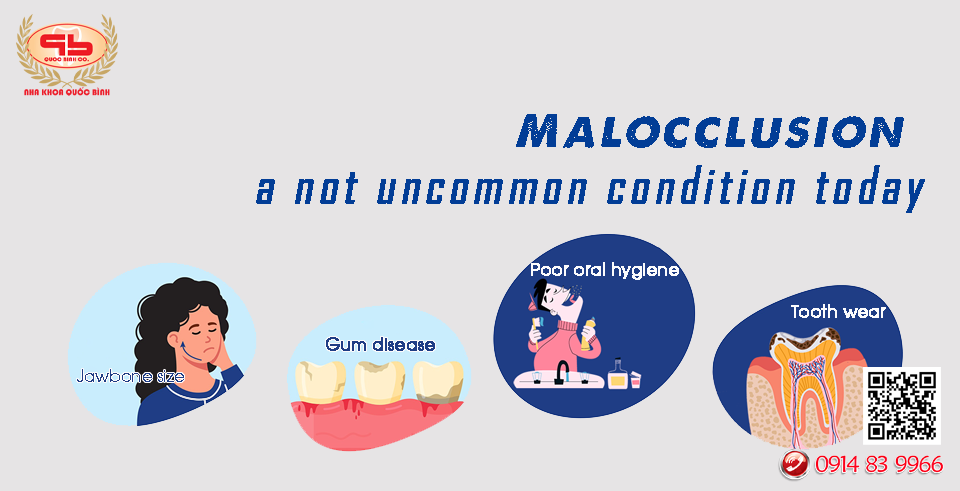
Malocclusion – a not uncommon condition today. While a normal bite of evenly aligned teeth ensures proper chewing function, balanced jaw development, and a healthy voice, malocclusion increases the risk of oral diseases.
Let’s explore the causes of malocclusion in children and adults, the types of malocclusion, and methods of diagnosis and treatment with Quoc Binh Dental Clinic.
Causes of Malocclusion
In children, the majority are due to genetics. However, some cases are caused by habits that can alter the shape of a child’s jaw in the early years of life. Such as:
- Cleft lip and palate
- Thumb sucking in infancy
- Frequent use of pacifiers when the child is over 3 years old
- Prolonged bottle feeding
- Abnormally shaped teeth
- Trauma causing jaw misalignment
- Tumors in the mouth or jaw
- Small gaps between baby teeth
In adults, common problems include:
- Tooth wear: We use our teeth to eat and speak daily. And we may grind our teeth while sleeping. Therefore, tooth wear is quite natural, causing teeth to shift.
- Crowded teeth: As we age, the jawbone shrinks as bone density decreases. This creates an imbalance between the size of the teeth and the size of the jawbone, potentially leading to crowded teeth.
- Poor oral hygiene: A good habit is to visit the dentist for professional cleanings and checkups every 6-12 months.
Otherwise, poor oral hygiene can lead to cavities and tooth loss. And if new teeth are not replaced, this can lead to misaligned teeth.
- Gum disease: This is another consequence of poor oral hygiene, as it shows plaque buildup.
It can lead to loose teeth, receding gums, and jawbone loss. These causes often lead to tooth loss, which can result in misaligned teeth.
Common Types of Malocclusion
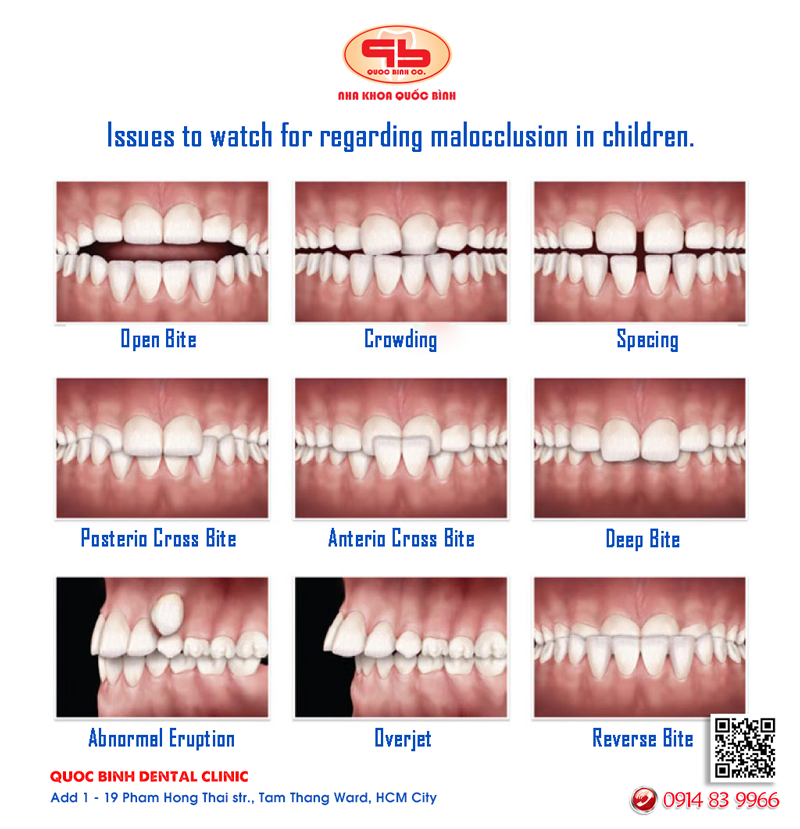
There are 7 main types of malocclusion. Each type of malocclusion causes different problems such as difficulty chewing, speaking, and/or increased risk of plaque buildup.
Deep bite (Overbite)
When the upper teeth overlap the lower teeth vertically. Most people have some form of deep bite. If the condition is mild, treatment may not be necessary.
But if the overlap is severe, it can cause headaches and increased tendency to grind teeth, leading to jaw pain. Therefore, in such cases, orthodontic treatment is recommended.
Deep bite (Overjet)
When the upper front teeth overlap the lower front teeth horizontally. Also known as rabbit teeth,
You may have difficulty chewing, drinking, biting, and speaking. You may also frequently bite your tongue or the inside of your cheek. A deep bite can even cause jaw pain and difficulty closing your lips.
Open bite
This is a condition where the upper and lower teeth do not touch each other when the mouth is closed.
An open bite can make chewing and biting food difficult. This dental condition can also affect speech and cause problems such as broken teeth.
Underbite
An underbite is a condition where the lower teeth protrude and overlap the upper teeth. This type of malocclusion is often hereditary and may require surgery in severe cases.
People with an underbite will have difficulty chewing food, speaking, and their lower teeth may wear down faster.
Crossbite
This is a condition where some upper teeth are behind the lower teeth. Factors such as genetics and prolonged thumb-sucking contribute to a crossbite.
Crossbites can cause cavities, sleep apnea, frequent headaches, jaw pain, as well as pain in the shoulder and neck muscles.
Crowded Teeth
This condition means there isn’t enough space for all the teeth to erupt properly. As a result, your teeth may overlap, twist, or be pushed forward or backward.
Crowded teeth can make brushing and flossing difficult, leading to plaque and bacteria buildup in the mouth.
Gapped Teeth (Diastema)
There are gaps between two teeth, most commonly the upper front teeth. While this condition may go unnoticed by many, it can cause several oral health problems.
Gapped teeth affect both children and adults because plaque can build up in the gaps, potentially leading to periodontal disease.
How to Diagnose Malocclusion
In Children:
Parents are encouraged to take their child for their first dental check-up at age 1 and twice a year thereafter. This will help detect any dental misalignment problems early.
By age 6 or 7, when permanent teeth begin to erupt, you should schedule an appointment with an orthodontist. They will check the bite and advise on whether treatment is needed.
In Adults:
Malocclusion in adults is diagnosed during routine dental check-ups. The dentist will examine the teeth and take X-rays (if needed) to check for misalignment.
Treatment Options for Malocclusion
-Traditional Braces
Braces are a form of cosmetic dentistry that uses metal brackets, wires, and modules to reposition your teeth.
Dental check-up frequency: Every 4 weeks
Cost: 20 million – 70 million VND
-Clear aligners:
Clear aligner systems use specialized materials and modern technology to optimize tooth movement.
Dental check-up frequency: Every 6-8 weeks
Cost: 45 million – 120 million VND
-Maxillofacial Surgery
For malocclusion caused by bone problems, orthodontics alone will not be sufficient. In such cases, your dentist will refer you to a maxillofacial surgery hospital.
During surgery, the upper/lower jaw may be moved forward or backward, or widened to align your jaw symmetrically.
—  —
—
QUOC BINH DENTAL CLINIC (formerly VUNG TAU)
General Director – Dr. PHAN QUOC BINH
Add 1: 19 Pham Hong Thai, Tam Thang Ward, Ho Chi Minh City.
09148399 66/ (0254) 383 99 66
ADD 2: 28 Le Loi, Vung Tau Ward, Ho Chi Minh City.
(0254) 381 83 18 / 0942 231 212
Add 3: 649 Truong Cong Dinh, Tam Thang Ward, Ho Chi Minh City
Doctor in charge: Dr NGUYEN HUU CHIEN
0708 649 649
Working hours: 7:30-11:30, 14:00-20:30
https://nhakhoaquocbinh.com/bang-gia/
https://www.facebook.com/nhakhoaquocbinh/
