
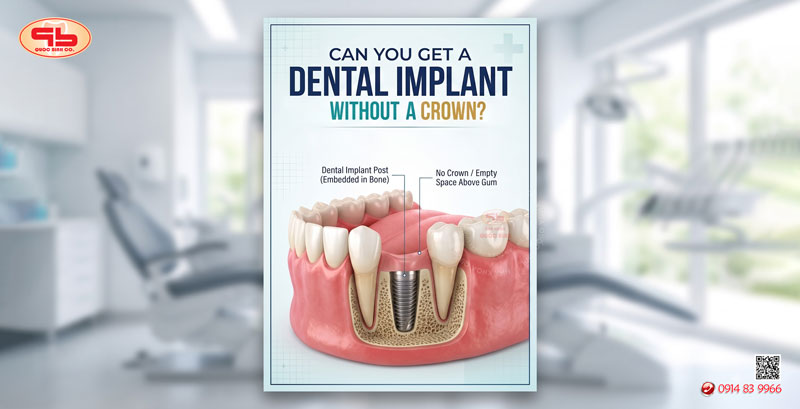
Can you get a dental implant without a crown immediately?
This is a common question among patients considering dental implant treatment. In some cases, an implant can be placed before the final crown is attached. However, delaying the restoration should be part of a planned treatment approach.
The appropriate timeline depends on implant stability, bone condition, and individual healing. Understanding these factors can help patients make informed decisions about their treatment.
Can You Get a Dental Implant Without a Crown?
Yes. A dental implant can be placed first, with the final crown attached at a later appointment.
After placement, the implant needs time to integrate with the surrounding jawbone. This biological process is called osseointegration.
During this period, the dentist monitors healing and implant stability. The crown is attached when the clinical conditions are suitable.
However, leaving an implant unrestored indefinitely is not a recommended treatment strategy. The dentist should establish a clear plan for follow-up and final restoration.
Why Do Some Patients Delay Getting a Dental Implant Crown?
There are several reasons why a patient may receive an implant before the final crown.
- Healing time: The implant may need additional time to integrate with the bone.
- Bone grafting: Patients who undergo bone augmentation may require a longer treatment timeline.
- Clinical considerations: The dentist may recommend delayed restoration based on implant stability.
- Treatment planning: Some cases require multiple procedures before the final crown can be attached.
- Personal circumstances: Patients may need to coordinate appointments or manage treatment costs.
The reason for delaying restoration matters. The dentist should determine whether the delay is appropriate for the individual case.
Does a Dental Implant Without a Crown Help Preserve Jawbone?
Dental implants can help maintain bone around the implant site by transferring functional forces to the surrounding bone when appropriately restored and loaded.
However, an implant without a crown does not guarantee complete prevention of bone loss. Bone changes can still occur after tooth extraction and implant placement. Their extent varies depending on the patient’s anatomy, healing, and treatment approach. The implant must also be appropriately positioned and monitored. A dentist can explain how the treatment plan addresses bone preservation in each case.
What Happens If You Leave a Dental Implant Without a Crown for Too Long?
Delaying the final crown does not automatically mean the implant will fail. However, an extended delay without professional monitoring is not advisable.
Potential concerns include:
- Changes in the surrounding tissues: The gums and bone may change during healing.
- Problems with the treatment plan: Delays may affect the timing of subsequent restorative procedures.
- Missing chewing function: The patient may continue to have a gap where the tooth is missing.
- Need for reassessment: The dentist may need to examine the implant before proceeding with restoration.
These concerns do not occur in every case. Regular follow-up helps the dentist identify problems and determine the next appropriate step.
When Should You Get a Crown After Dental Implant Placement?
There is no single timeline that applies to every patient.
Some cases may qualify for immediate or early restoration. Others require a longer healing period before the final crown is attached.
The dentist considers several factors, including:
- Initial implant stability.
- Bone quality and available bone volume.
- Whether bone grafting was performed.
- Implant location and functional demands.
- Soft tissue healing and overall oral health.
The final decision should be based on clinical assessment rather than a fixed number of months.
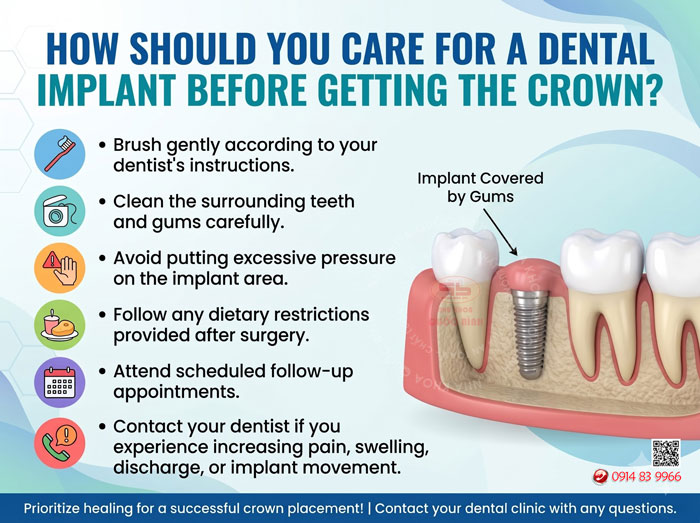
How Should You Care for a Dental Implant Before Getting the Crown?
Good oral hygiene and regular monitoring remain important while the implant heals.
Follow these recommendations:
- Brush gently according to your dentist’s instructions.
- Clean the surrounding teeth and gums carefully.
- Avoid putting excessive pressure on the implant area.
- Follow any dietary restrictions provided after surgery.
- Attend scheduled follow-up appointments.
- Contact your dentist if you experience increasing pain, swelling, discharge, or implant movement.
Do not attempt to adjust or manipulate the implant yourself. Contact your dentist if you have concerns during healing.
Should You Get an Implant Just to Preserve Jawbone?
The decision to place a dental implant should consider more than bone preservation alone. A complete treatment plan should address tooth replacement, chewing function, appearance, oral health, and long-term maintenance. If you are not ready for the final crown, discuss your options with your dentist before starting treatment.
Depending on your condition, the dentist may recommend an alternative timeline or another tooth-replacement option. The goal is to choose a treatment that suits your clinical needs and long-term oral health.
Frequently Asked Questions
Can a dental implant heal without a crown?
Yes. An implant can heal before the final crown is attached. The timing depends on the treatment protocol and clinical conditions.
How long can you wait before getting a dental implant crown?
There is no universal maximum waiting period. Your dentist should establish an appropriate timeline and monitor the implant during healing.
Will my jawbone shrink if I do not get a crown?
Bone changes may still occur after tooth loss and implant placement. An implant does not eliminate all bone remodeling.
Can I chew normally before getting the crown?
Not necessarily. Your ability to chew depends on the treatment stage and whether a temporary restoration is provided. Follow your dentist’s instructions about eating and chewing.
Conclusion
Getting a dental implant without an immediate crown is possible in selected cases. The implant may need time to integrate with the surrounding bone before final restoration.
However, delaying the crown should be part of a planned treatment approach. Implant stability, bone condition, and healing all influence the appropriate timeline.
Consult your dentist to determine when restoration should proceed and how the implant should be monitored in the meantime.
— ☘️ ☘️ ☘️—
QUOC BINH DENTAL CLINIC (formerly Vung Tau branch)
General Director – Dr. PHAN QUOC BINH
Location 1: 19 Pham Hong Thai, Tam Thang Ward, Ho Chi Minh City.
☎️ 0914 839 966 / (0254) 383 99 66
Location 2: 28 Le Loi, Vung Tau Ward, Ho Chi Minh City.
☎️ (0254) 381 83 18 / 0942 231 212
Location 3: 649 Truong Cong Dinh, Tam Thang Ward, Ho Chi Minh City.
Dentist in charge: Dr. NGUYEN HUU CHIEN
☎️ 0708 649 649
Working hours: 7:30 AM – 11:30 AM, 2:00 PM – 8:30 PM
https://nhakhoaquocbinh.com/en/price-list/
https://www.facebook.com/nhakhoaquocbinh/
