
When Is Bone Grafting Needed for Dental Implants?
When is bone grafting needed for dental implants? This is a common question among patients who have lost teeth. Insufficient jawbone can affect implant placement and treatment planning.
However, not everyone who loses a tooth needs bone grafting. A dentist must evaluate the available bone and the planned implant position before recommending treatment.
When Is Bone Grafting Needed for Dental Implants?
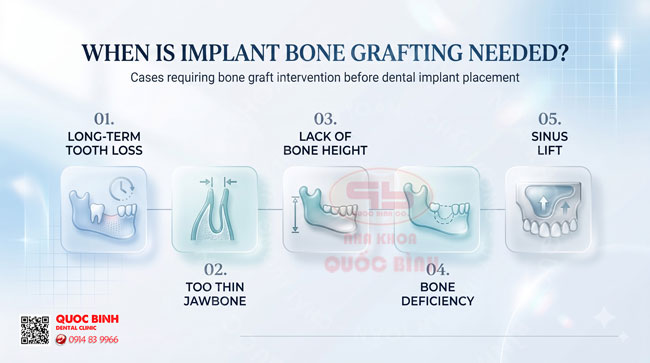
Dental implant bone grafting may be recommended when the jawbone lacks sufficient volume to support an implant in the planned position.
Common situations include:
- Long-term tooth loss: The jawbone may gradually shrink after a tooth is lost.
- Insufficient bone width: The ridge may be too narrow for proper implant placement.
- Limited bone height: There may not be enough vertical bone to support an implant safely.
- Bone defects: Trauma, infection, or periodontal disease may cause bone loss.
- Sinus augmentation requirements: Some patients with missing upper molars lack sufficient bone height for implant placement.
The dentist will recommend an appropriate approach based on clinical findings. The length of time a tooth has been missing does not, by itself, determine whether bone grafting is necessary.
Why Can Long-Term Tooth Loss Lead to Bone Grafting?
After a tooth is lost, the surrounding alveolar bone no longer receives the same functional stimulation. Natural bone remodeling can gradually reduce the bone’s volume.
The extent of bone loss varies between individuals. It also depends on the cause of tooth loss and the patient’s oral health.
Insufficient bone can make it difficult to place an implant in the correct position. In selected cases, bone grafting can increase the available bone volume.
However, bone grafting is not mandatory for every patient who has been missing teeth for a long time.
How Can You Tell If You Need Bone Grafting for Dental Implants?
Bone loss is not always visible during a routine visual examination. The gums may appear normal even when the underlying bone has decreased.
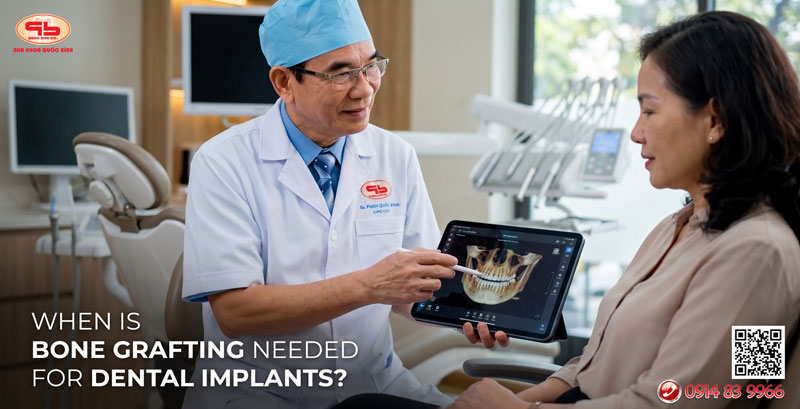
Dentists usually combine a clinical examination with diagnostic imaging. A CBCT scan can help assess jawbone height, width, and anatomical structures.
These findings help determine implant positioning and whether bone augmentation is needed. Patients should not rely on appearance alone to diagnose bone loss.
Should Bone Grafting Be Done Before or During Implant Placement?
The timing depends on the extent of bone loss and the clinical conditions.
Bone grafting before implant placement: This approach may be suitable when substantial bone augmentation is required. The grafted area may need time to heal before the implant procedure.
Bone grafting during implant placement: This may be considered when the implant can achieve adequate initial stability. The dentist will assess the bone defect and the feasibility of placing the implant safely.
Neither approach is suitable for every patient. Treatment planning should be based on clinical examination and diagnostic imaging.
Does Bone Grafting Affect the Dental Implant Timeline?
Yes. Bone grafting may extend the overall treatment timeline.
The grafted bone needs time to heal and stabilize. The implant also needs sufficient time to integrate with the surrounding bone before appropriate loading.
Healing time depends on the grafting technique, the extent of bone loss, and implant stability. Therefore, the exact timeline cannot be determined without an individual assessment.
The dentist will monitor healing and decide when implant restoration can proceed. Patients should attend follow-up appointments and avoid shortening the recommended healing period without professional advice.
Is Bone Grafting Always Necessary for Dental Implants?
No. Patients with sufficient jawbone volume may receive dental implants without bone grafting.
Some minor bone defects can be managed with appropriate techniques during implant placement. Other cases may require bone augmentation or a modified treatment plan.
The goal is not to perform bone grafting in every case. The priority is to create suitable conditions for accurate implant placement and stable restoration.
Frequently Asked Questions
Does missing teeth for many years mean I need bone grafting?
No. The need for bone grafting depends on the remaining bone volume. A dentist must evaluate your condition and diagnostic images before making a recommendation.
How long after bone grafting can I get dental implants?
The timeline depends on the grafting technique and healing response. Your dentist will determine the appropriate timing after reviewing your progress.
Can I get dental implants without bone grafting?
Yes, if your jawbone meets the requirements for treatment. The decision depends on the implant placement and restoration plan.
Conclusion
Bone grafting for dental implants may be necessary when the jawbone lacks sufficient volume or has significant defects. Long-term tooth loss, a narrow ridge, and limited bone height are common reasons for considering this procedure.
However, not every dental implant patient needs bone grafting. A clinical examination and appropriate diagnostic imaging help determine the most suitable treatment plan.
—  —
QUOC BINH DENTAL CLINIC (formerly Vung Tau branch)
General Director – Dr. PHAN QUOC BINH
Location 1: 19 Pham Hong Thai, Tam Thang Ward, Ho Chi Minh City.
 0914 839 966 / (0254) 383 99 66
Location 2: 28 Le Loi, Vung Tau Ward, Ho Chi Minh City.
(0254) 381 83 18 / 0942 231 212
Location 3: 649 Truong Cong Dinh, Tam Thang Ward, Ho Chi Minh City.
Dentist in charge: Dr. NGUYEN HUU CHIEN
0708 649 649
Working hours: 7:30 AM – 11:30 AM, 2:00 PM – 8:30 PM
https://nhakhoaquocbinh.com/en/price-list/
https://www.facebook.com/nhakhoaquocbinh/
