
Oral hygiene can be considered the simplest act in daily dental care. Normally, brushing and flossing are enough to keep your mouth relatively clean. However, when wearing braces, that’s not enough. So what should you do to effectively clean your teeth while wearing braces?
When wearing braces, food easily gets trapped in certain places such as between the archwire and teeth, around the brackets, and between teeth before they are properly aligned… This creates favorable conditions for plaque formation, allowing bacteria to thrive and harm your teeth.
Therefore, oral hygiene is very important when wearing braces. If you do it well, you will minimize inflammation, cavities, and bad breath throughout the orthodontic treatment process.
So what should you do to effectively clean your teeth while wearing braces?
Brush your teeth with the right toothbrush.
Use a toothbrush with moderately soft bristles and toothpaste containing fluoride. Brush gently to avoid scratching or damaging the gums, causing gum recession, or wearing down the tooth necks.
On surfaces with braces, brush above and below the brackets and wires. Also, brush the tooth surfaces around the area where the braces are attached.
On surfaces without braces, brush as usual.
Note: Brush your teeth after every meal and before bed to keep your mouth fresh and reduce plaque buildup that can damage your teeth.
You’ll find that brushing while wearing braces will wear out your toothbrush bristles quickly, so replace your toothbrush to ensure effective oral hygiene.
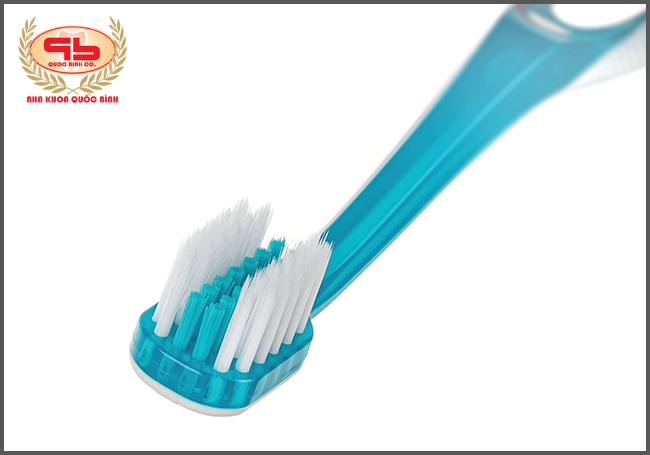
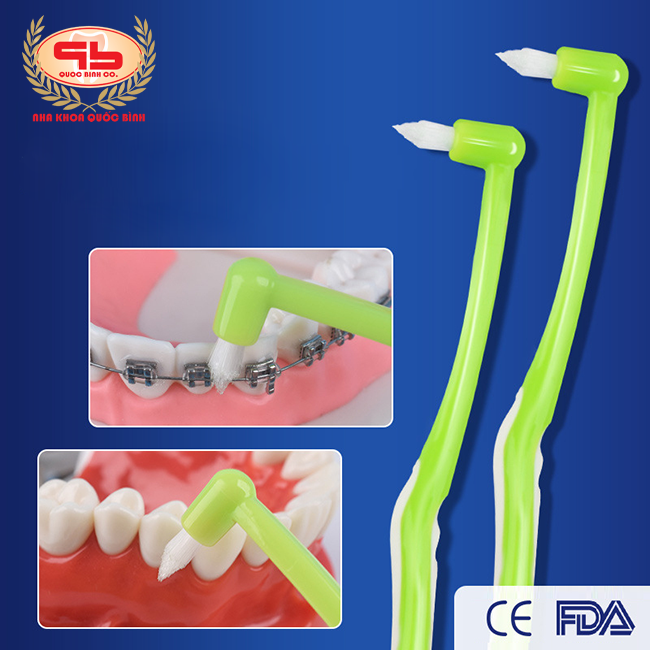
Interdental brushes are incredibly useful for effective teeth cleaning while wearing braces.
Besides a regular toothbrush, those undergoing orthodontic treatment should also use interdental brushes. These are also essential items to have in your bag when going to work or out for meals with friends.
Interdental brush heads come in many sizes, suitable for all spaces between teeth, or any gaps between brackets and wires…
Interdental brushes and handles can be straight (I-shaped) or angled (L-shaped); very suitable for all areas that need cleaning (upper jaw, lower jaw, outer or inner tooth surfaces).
In addition, there is a type of small-headed brush used to clean the corners of the jaw or the crevices of teeth and brackets/wires; this type is also quite effective in cleaning teeth while wearing braces.
All these types of brushes are very simple to use and effectively remove food debris.

Note: Depending on the size and hardness of each brush head, you should replace the brush when you notice that the bristles are no longer as effective at cleaning as they were initially.
Dental floss is an indispensable tool for effective oral hygiene while wearing braces.
Dental floss is easy to use and very effective in removing leftover food particles between teeth.
For those wearing braces, dental floss is truly an indispensable tool; it helps clean areas where a regular toothbrush can’t reach effectively.
When used correctly, dental floss will not damage the gums. If you are wearing braces, you may need to be a little more meticulous when using dental floss.
Refer to the following instructions for use:
- Take a piece of floss 30-45cm long.
- Thread it through the archwire (you can use a floss guide), wrap the two ends of the floss around your index or middle fingers and gently insert it into the gap between your teeth.
- Gently pull the floss along the tooth surface, sliding it up and down to clean plaque around the teeth.
- Do not press hard on the gums, but only gently slide it slightly to clean the area below the gum line. Because you’re wearing orthodontic appliances, the threading process will need to be repeated several times. You need to be patient.
Is a water flosser necessary for cleaning braces?
The cleaning mechanism of a water flosser is to use jets of water from nozzles (with various modes) to remove leftover food particles.
Water flossers are not only helpful for those with braces; they are also useful for people with dental crowns or implants.
Currently, there are travel-size water flossers (compact and easy to carry) and family-size models (large water tank capacity, multiple nozzles).
The water nozzles are easy to replace, and the device can be powered by a rechargeable battery or plugged directly into the power outlet.
Dietary habits make oral hygiene easier.
Eating a proper diet not only helps reduce the risk of brackets and wires coming loose, but also makes oral hygiene easier.
- Avoid sticky, hard foods that can easily dislodge brackets and make brushing difficult.
- Also avoid foods high in starch and sugar (sweets, etc.) as they are easily converted into acids that damage tooth enamel.
- Avoid smoking and limit the consumption of foods with very strong colors such as tea and coffee, as they easily stain and are difficult to clean when wearing multiple orthodontic appliances.
- Remember to clean your teeth and appliances thoroughly after eating and drinking to prevent plaque buildup that can negatively affect your teeth later.
QUOC BINH DENTAL CLINIC (formerly VUNG TAU)
Branch 1 – 19 Pham Hong Thai Street, Tam Thang Ward, Ho Chi Minh City
Specialized center for maxillofacial treatment, orthodontics, dental implants, and porcelain crown restorations.
Treatment Doctor: Dr. PHAN QUOC BINH with over 25 years of experience.
Please make an appointment via hotline 0914 83 9966 / 0254 383 9966
Cosmetic Dentistry Fanpage: https://www.facebook.com/nhakhoathammyquocbinh/
General Dentistry Fanpage: https://www.facebook.com/nhakhoaquocbinh/
