
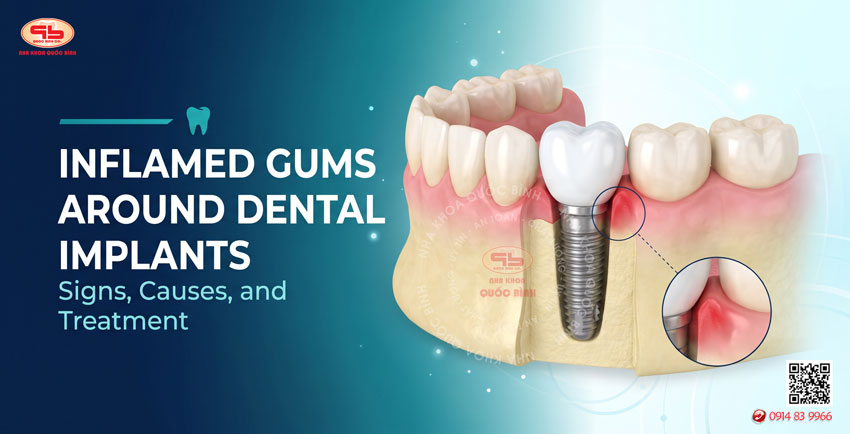
Inflamed Gums Around Dental Implants: Signs, Causes, and Treatment
Inflamed gums around dental implants are a concern for many patients after implant placement. This condition may cause redness, swelling, bleeding, or discomfort around the implant.
If left uncontrolled, inflammation may affect the tissues supporting the implant. So, how can you recognize, treat, and prevent this condition?
1. Common Signs of Gum Inflammation Around Dental Implants
Soft tissue inflammation around an implant may develop when plaque accumulates around the implant site. Common signs include:
- Red and swollen gums: The gum tissue around the implant may appear red or more swollen than usual.
- Bleeding during oral hygiene: The gums may bleed when brushing or cleaning between teeth.
- Mild discomfort: Some patients experience discomfort when touching the affected gum area.
- Bad breath: Plaque and bacteria may contribute to unpleasant breath.
- Sensitive gums: The soft tissues around the implant may become more easily irritated.
However, these signs alone cannot confirm an exact diagnosis. A dentist needs to examine the area and assess the tissues surrounding the implant.
2. Why Do Gums Become Inflamed Around Dental Implants?
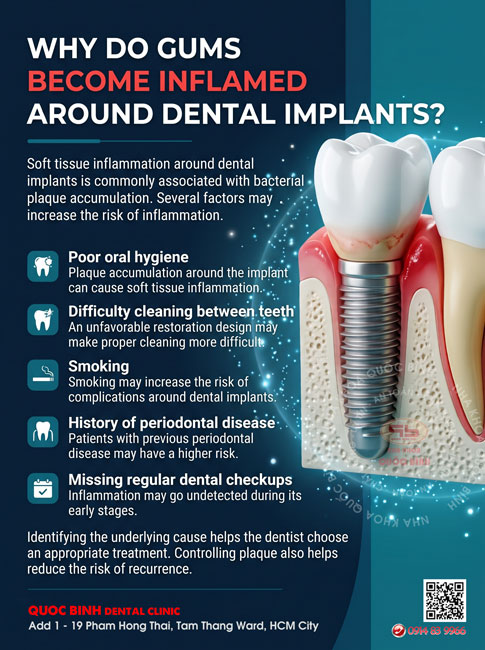
Soft tissue inflammation around dental implants is commonly associated with bacterial plaque accumulation. Several factors may increase the risk of inflammation.
- Poor oral hygiene: Plaque accumulation around the implant can cause soft tissue inflammation.
- Difficulty cleaning between teeth: An unfavorable restoration design may make proper cleaning more difficult.
- Smoking: Smoking may increase the risk of complications around dental implants.
- History of periodontal disease: Patients with previous periodontal disease may have a higher risk.
- Missing regular dental checkups: Inflammation may go undetected during its early stages.
Identifying the underlying cause helps the dentist choose an appropriate treatment. Controlling plaque also helps reduce the risk of recurrence.
3. Is Gum Inflammation Around Dental Implants Dangerous?
Peri-implant mucositis is inflammation of the soft tissues without progressive supporting bone loss. When detected early, this condition can often be controlled with appropriate treatment.
However, peri-implantitis may develop with associated loss of supporting bone. This is a more serious condition that can affect implant stability.
Several signs require professional assessment:
- Persistent gum redness or recurrent bleeding.
- Pus or increasing pain around the implant.
- Gum recession or additional exposure of the implant surface.
- Signs of movement in the implant or its restoration.
These symptoms do not independently confirm bone loss. A dentist may need an examination and dental X-rays for proper assessment.
4. What Should You Do If You Have Inflamed Gums Around a Dental Implant?
If you notice redness or bleeding around your implant, schedule a dental examination. Do not use antibiotics or topical medications without professional advice.
Depending on the actual condition, your dentist may perform the following steps:
- Assess the tissues around the implant: Examine the gums, plaque accumulation, and restoration condition.
- Clean the inflamed area: Remove plaque and deposits using an appropriate method.
- Adjust the restoration: Address factors that make oral hygiene difficult, when necessary.
- Provide further treatment: Apply appropriate methods if peri-implantitis with bone damage is present.
- Monitor after treatment: Evaluate the response and provide home care instructions.
Treatment depends on the severity of inflammation and the condition of the supporting bone. Not every case requires medication or surgical intervention.
5. How to Prevent Gum Inflammation Around Dental Implants
Proper care helps reduce plaque accumulation and protect the tissues surrounding dental implants. You should maintain the following habits:
- Brush properly: Clean your teeth and implant restoration at least twice daily.
- Clean between teeth: Use suitable interdental cleaning tools as recommended by your dentist.
- Attend regular dental checkups: These visits help detect inflammation and related problems early.
- Limit smoking: Quitting smoking helps reduce risks to the tissues surrounding dental implants.
- Manage periodontal disease: Treat and monitor gum conditions according to professional advice.
Your dental checkup schedule should be adjusted according to your individual risk and condition. Do not wait until pain develops before having your implant examined.
6. When Should You See a Dentist About Your Dental Implant?
Contact your dental clinic if you experience swollen or red gums, recurrent bleeding, or pus. Increasing pain or a loose restoration also requires prompt assessment.
At Nha Khoa Quốc Bình, patients can receive an examination to assess the tissues surrounding their dental implants. The dentist will recommend an appropriate treatment based on the actual condition.
Gum inflammation around dental implants should be detected and controlled early. Proper oral hygiene and regular dental checkups help maintain healthy tissues around implants over time.
Signs of Dental Implant Failure: Early Symptoms and Treatment
—  —
QUOC BINH DENTAL CLINIC (formerly Vung Tau branch)
Dr. PHAN QUOC BINH
Location 1: 19 Pham Hong Thai, Tam Thang Ward, Ho Chi Minh City.
 0914 839 966 / (0254) 383 99 66
Location 2: 649 Truong Cong Dinh, Tam Thang Ward, Ho Chi Minh City.
Dentist in charge: Dr. NGUYEN HUU CHIEN
0708 649 649
Working hours: 7:30 AM – 11:30 AM, 2:00 PM – 8:30 PM
https://nhakhoaquocbinh.com/en/price-list/
https://www.facebook.com/nhakhoaquocbinh
