
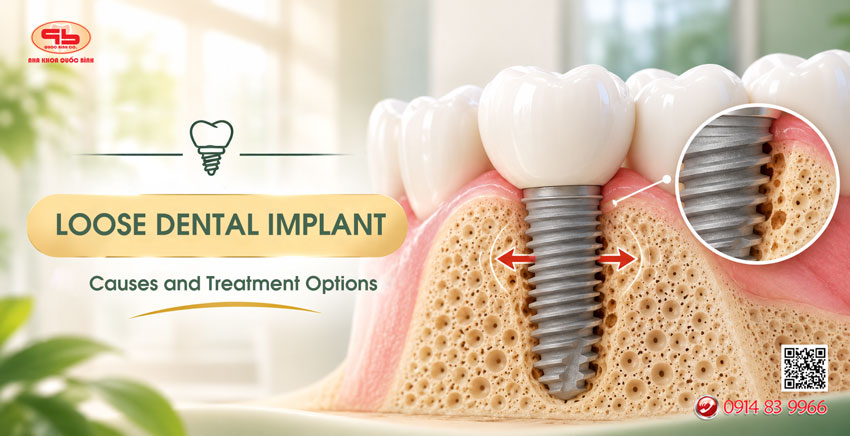
Loose Dental Implant: Causes and Treatment Options
A loose dental implant can indicate a problem with the implant itself or its attached components. Early diagnosis helps prevent further complications and protects your oral health.
If your dental implant feels loose, do not ignore the symptoms or attempt to tighten it yourself. A dentist can identify the cause and recommend appropriate treatment.
What Does a Loose Dental Implant Mean?
A dental implant consists of three main components: the implant fixture, the abutment, and the dental crown.
The implant fixture is placed into the jawbone. The abutment connects the fixture to the crown, which replaces the visible part of the missing tooth.
When a patient reports a loose dental implant, the problem may involve different components.
- Loose implant fixture: The implant moves within the jawbone, potentially indicating failed osseointegration or bone loss.
- Loose abutment screw: The connecting screw becomes loose, allowing movement in the crown or abutment.
- Loose dental crown: The crown moves or detaches while the implant fixture remains stable.
These conditions require different treatments. A clinical examination is necessary to determine the exact cause.
Common Causes of a Loose Dental Implant
Several factors can contribute to implant mobility or looseness.
1. Failed Osseointegration
Osseointegration occurs when the implant integrates with the surrounding jawbone. If this process fails, the implant may not become stable.
Possible contributing factors include infection, inadequate bone quality, excessive loading during healing, and certain health conditions.
2. Peri-Implantitis and Bone Loss
Peri-implantitis is an inflammatory condition affecting the tissues around a dental implant. It can cause progressive bone loss and may eventually lead to implant mobility.
Warning signs include swollen gums, bleeding, tenderness, and pus around the implant.
3. A Loose Abutment Screw
Repeated chewing forces or mechanical complications may loosen the abutment screw. Patients may notice movement in the crown or hear clicking while chewing.
This does not necessarily mean the implant fixture has failed.
4. Excessive Bite Forces
Teeth grinding, clenching, or an uneven bite can place excessive pressure on the implant restoration. Over time, these forces may contribute to screw loosening or other mechanical complications.
Signs of Dental Implant Failure: Early Symptoms and Treatment
How Is a Loose Dental Implant Treated?
Treatment depends on which component is loose and whether the surrounding bone remains healthy.
- Loose crown or screw: The dentist checks the components and bite, then repairs or replaces the affected parts when appropriate.
- Inflamed surrounding tissues: Professional cleaning and periodontal treatment may help control inflammation.
- Peri-implantitis with bone loss: Treatment may involve cleaning the affected area, managing infection, and considering surgical procedures.
- A mobile implant fixture: If the implant has failed to integrate or has lost sufficient bone support, removal may be necessary.
After implant removal, the dentist assesses healing and bone conditions before considering replacement. Not every loose implant requires removal.
What Should You Do If Your Dental Implant Feels Loose?
If your dental implant feels unstable, arrange a dental examination as soon as possible.
Until your appointment:
- Avoid chewing hard foods on the affected side.
- Do not wiggle the implant or attempt to tighten its components.
- Maintain gentle oral hygiene around the area.
- Avoid using household adhesives or other materials to secure the crown.
Seek urgent dental care if you develop increasing pain, significant swelling, or pus. Difficulty breathing or swallowing requires emergency medical attention.
Inflamed Gums Around Dental Implants: Signs, Causes, and Treatment
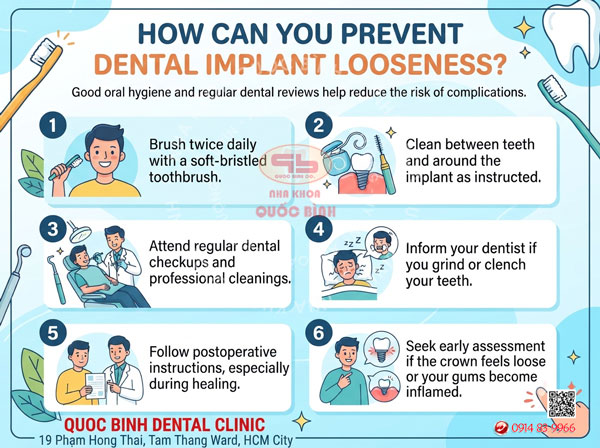
How Can You Prevent Dental Implant Looseness?
Good oral hygiene and regular dental reviews help reduce the risk of complications.
- Brush twice daily with a soft-bristled toothbrush.
- Clean between teeth and around the implant as instructed.
- Attend regular dental checkups and professional cleanings.
- Inform your dentist if you grind or clench your teeth.
- Follow postoperative instructions, especially during healing.
- Seek early assessment if the crown feels loose or your gums become inflamed.
When Should You See a Dentist?
Do not wait for the implant to become noticeably mobile before seeking advice. Early assessment may help identify a loose screw, crown problem, or inflammation before the condition worsens.
Your dentist may examine the implant, check the stability of its components, assess the surrounding gums, and take dental X-rays when indicated.
At the first sign of a loose dental implant, professional assessment is the safest next step. Early treatment can help protect the surrounding tissues and determine whether the implant can be preserved.
This article provides general information and does not replace an individual dental examination. Diagnosis and treatment should be determined by a qualified dental professional.
—  —
QUOC BINH DENTAL CLINIC (formerly Vung Tau branch)
Dr. PHAN QUOC BINH
Location 1: 19 Pham Hong Thai, Tam Thang Ward, Ho Chi Minh City.
 0914 839 966 / (0254) 383 99 66
Location 2: 649 Truong Cong Dinh, Tam Thang Ward, Ho Chi Minh City.
Dentist in charge: Dr. NGUYEN HUU CHIEN
0708 649 649
Working hours: 7:30 AM – 11:30 AM, 2:00 PM – 8:30 PM
https://nhakhoaquocbinh.com/en/price-list/
https://www.facebook.com/nhakhoaquocbinh
